.webp)
This list shows how countries tackle the same problem: moving people and goods across tough terrain. Norway’s Ryfylke Tunnel ends ferry waits; Turkey’s Zigana Tunnel bypasses a snowbound pass with twin tubes and heavy ventilation; China contributes several very long, deep or high tunnels built with anchoring systems and quick construction methods; Switzerland’s Gotthard still stands as a milestone even after longer tunnels were built; and Japan’s Yamate Tunnel shows what it takes to dig under a busy city. Each project is a balance of geology, weather, safety, cost and local needs.
World's Longest 9 Tunnels: Subterranean Giants
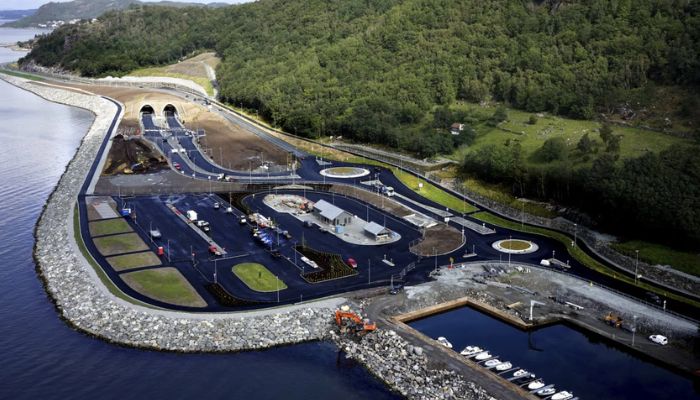
1. Ryfylke Tunnel, Norway – 8.98 miles (14.46km)
The Ryfylke Tunnel is at the moment the longest undersea road tunnel in the world and it runs roughly 8.98 miles between Stavanger and Ryfylke, like that. Norway built the Ryfylke Tunnel mainly to curb dependence on ferries, and so instead of waiting around you can just get through. It’s now folded into its Rog fast project which aims to link multiple islands through subsea tunnels, and that is why Ryfylke might eventually give up its title as the construction keeps rolling on.
You may also read :- The Flooded Tunnel: A Personal Exploration
2. Zigana Tunnel, Türkiye – 8.99 miles (14.48km)
Close to the northern coast of Turkiye, the Zigana Tunnel runs through rugged mountain rock to bypass the Zigana Pass that becomes blocked by snow in the winter.
Work started on the Zigana Tunnel in 2016 and it was finished in 2023. It is Türkiye’s longest road tunnel at 8.99 miles long and it reduces the journey via the exposed Zigana Pass by five miles. It also cuts the journey time in summer months by around 20 minutes.
3. Zigana Tunnel, Türkiye – 8.99 miles (14.48km)
The Zigana Tunnel, which consists of two separate tunnels to keep the traffic flowing apart, engineers built using the New Austrian Tunnelling Method. The system adapts to the rock as excavation continues, and it relies on a spray-on concrete method to form the walls.
In total, the construction team added 16 laybys in each of the tunnel’s tubes. The architects designed six ventilation shafts, plus 40 connecting tunnels between the pair of tubes. On top of that, they installed nine transformer rooms to hold the Zigana Tunnel’s electrical power.
4. Muzhailing Tunnel, China – 9.46 miles (15.22km)
A great many challenges confronted the designers and builders of the Muzhailing Tunnel in China’s Gansu Province. For starters, they built it at a high altitude and also in an area of active seismic activity, so it’s prone to earthquakes. Although these circumstances aren’t ideal for making one of the world’s longest road tunnels, the builders used a technology called NPR anchor cabling, which secures the structure into the surrounding rock. It also helps the tunnel handle deformation as the ground shifts.
5. Tian Taishan Tunnel, China – 9.67 miles (15.56)
Constructing the Tiantaishan Tunnel cost 2.75 billion Chinese Yuan (£300 million), which is a bargain in the road tunnel universe. Engineers started the project in 2016, and they finished the Tian Taishan Tunnel and made it operational by 2021, which is again pretty record-ish when we discuss build time. Honestly, all of this becomes even more impressive when you consider the high-altitude section of the tunnel, along with the bitter cold weather in Shaanxi Province, located in the northwest of China.
6. Gotthard Road Tunnel, Switzerland – 10.46 miles (16.84km)
Once the world’s longest road tunnel, Switzerland’s Gotthard Base Tunnel has since been overtaken by longer projects. Still, it’s notable for its age — it opened in 1980, decades before many of the others here. Work on it began in 1970, and it carries traffic at elevations reaching around 1,175 metres (3,855 feet), which is actually higher than Yr Wyddfa (Mount Snowdon) in Wales.
7. Jinping Shan Tunnel, China – 10.90 miles (17.54km)
While the other road tunnels in the top ten are open to the public, the Jinping shan Tunnel kind of restricts what traffic can use it. This is because workers built the tunnel to provide access to the Jinping Dam, which is the world’s highest dam and also supports connection to another hydro power dam. The Jinping shan Tunnel goes through an area known for geological activity in south west China. This is partly why access to the tunnel is limited, and also because of the security around the hydroelectric complex at the dam.
8. Zhongnanshan Tunnel, China – 11.21 miles (18.04km)
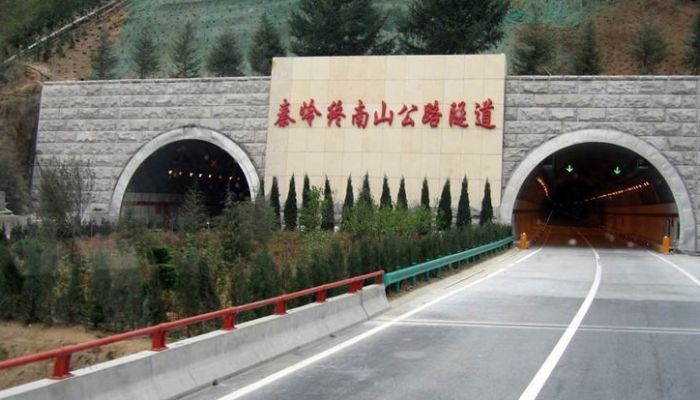
The Zhongnanshan Tunnel is not far from the Tian Taishan Tunnel, but it beats its near neighbor overall, like in length and also how far down it goes beneath the Earth’s surface. With a maximum depth of 1640-metres, the Zhongnanshan Tunnel sits among the deepest in the world.
Still, even with that, it only took five years to finish the tunnel, roughly the same as several shorter tunnels in China that run at lesser depths. Construction began in 2002 on the Zhongnanshan Tunnel, and when it opened to traffic in 2007, it was actually the longest tunnel in Asia at the time.
9. Yamate Tunnel, Japan – 11.3 miles (18.20km)
It took like 15 years for the Yamate Tunnel to finally finish, mostly because of delays from objections residents raised and also worries about the natural environment. Still, in the end, authorities gave the project the go-ahead because they expected it to ease the traffic on Yamate Street that sits above the tunnel. As for the build itself, there are 2 tubes in total, and each one is 11 metres in diameter. Along the length of the tunnels, you can find emergency telephones placed every 100 metres, sort of like a spaced reassurance point. There’s also a more sophisticated filtration system that removes particulate emissions from the air that the tunnels pull out from inside.
Conclusion
These tunnels are impressive. Some slice through solid rock, others tunnel beneath the sea, and many are built to withstand rough weather and unstable ground. The payoff is clear: shorter trips and safer roads. Norway’s Ryfylke Tunnel cuts out ferry waits, while several Chinese projects rely on special anchors and seismic measures to hold up at high altitude or in shifting earth. Each tunnel answers a local problem, and as engineers take on new subsea and mountain links the methods and rankings will change — but the aim stays the same: easier, more reliable travel.