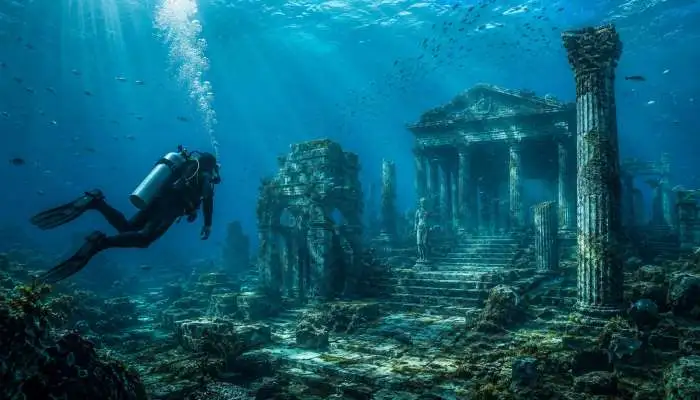
Our oceans, rivers and lakes contain more than the exotic aquatic creatures and mammals. Many of us are not aware of the fact that divers and explorers have unearthed numerous underwater cities which were once lost or erased from human memory and assumed to be myths. In this article, we will learn about some of the spectacular forgotten cities discovered deep down.
Baia, Italy
The remains of Baia (or Baiae) rest beneath the waves in the Gulf of Naples, a stone's throw away from the more well-known lost city of Pompeii. Similar to its similarly cursed sister city, Baia was an ancient Roman town swallowed by volcanology. Instead of being encased in time by lava flows however, the inhabitants of Baia are thought to have had time to escape the town before water levels consumed it.
More like an underwater sculpture park than a city in which people dwelled, the ruins of Baia do not quite look like anything real at all. Yet, during its prime, approximately 100 BC to AD 500, Baia already didn't seem very much of a part of our real world anyway. The ultra-wealthy famously designated it as a playground, an elite resort destination where emperors like Julius Caesar even owned a vacation villa.
You may also read :- Exploring the Unknown: Fascinating Deep-Sea Research Discoveries
Atlit Yam, Israel
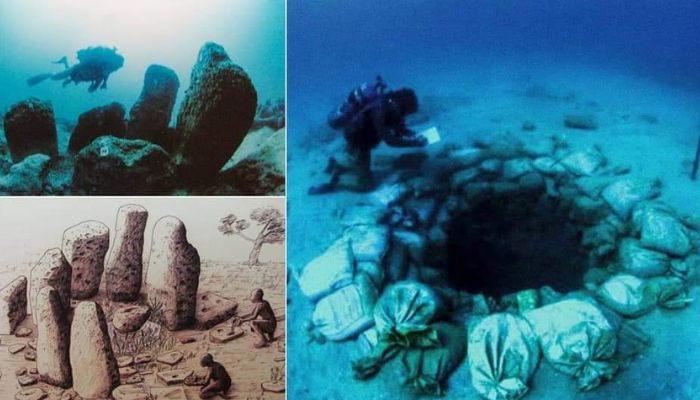
After researchers discovered it under the Mediterranean Sea in 1984, this Neolithic village sits off the coast of Atlit, a coastal town south of the city of Haifa, Israel. The settlement is thought to be as old as 7000 B.C. and is one of the oldest sunken settlements discovered to date. In addition to its age, it is also well-preserved - it contains stone wells, graineries, and burial plots that hold skeletons. Perhaps most fascinating is a stone circle discovered standing, the original meaning of which remains an enigma.
Pavlopetri, Greece
So that thing that might seem like a beautiful place for a bit of rock-pooling is actually the tip of an ancient sunken city. Pavlopetri is the oldest submerged city in the world and thought to be around 5,000 years old. The Bronze Age port sits below the waterline in Vatika Bay, Laconia and not far from a pale-gold sandy beach.
Mahabalipuram, India
Underwater ruins of long-lost settlements in southern India were more myth than fact, until researchers discovered one in the shallow waters just off the coast of the port town of Mahabalipuram (also known as Mamallapuram). Right before a tsunami devastated the Asian coastline in December 2004, observers of the waters swore they saw large rocks and walls at low tide. It turned out they had been right – the rubble was actually from a lost ancient port city.
Shicheng, China
China's so-called 'Atlantis of the East' isn't as much of a mystery anymore after someone intentionally submerged it in 1959 in order to construct the Xin'an Dam and power a hydroelectric plant. Shicheng's architecture has been traced as far back as the 16th century - and miraculously, much of it is still astonishingly preserved just below the surface of Qiandao Lake in the Zhejiang province.
Submerged for decades, the underwater city was essentially forgotten until 2001 when a governmental expedition found the preserved city with wide streets, stone walls, sculpted gates and even lions, dragons and phoenixes carved in stone.
Olous, Greece
Old Olous was a bustling city of an estimated 40,000 residents that now lies submerged in the Aegean Sea. You can still see the city walls and foundations on the floor of the sea, slightly offshore of Crete's northern coast near the village of Elounda. Scholars debate the reasons for the submergence and some believe it sank when Santorini erupted.
Muang Badan, Thailand
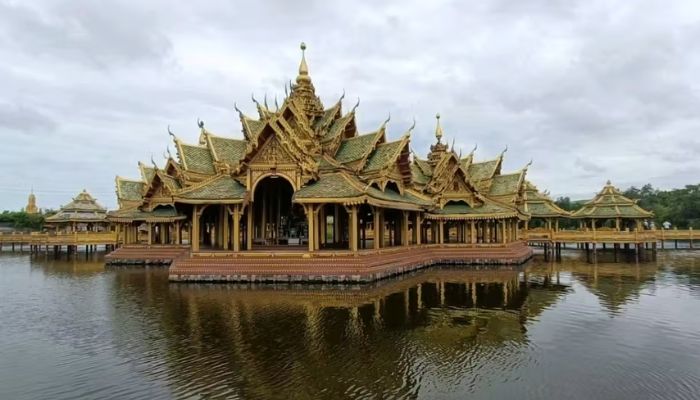
The city is known as Muang Badan, or "city of the netherworld", although it always seems to lie both in water and on land. Vajiralongkorn Dam swallowed this flooded site in 1984, and along with it an entire town of houses - and one remarkably famous example: the aptly named "Sunken Temple," built in the 1950s.
Simena, Turkey
Walls and foundations lie just under the surface of the region's crystal-clear waters in what seems to be some kind of submarine swimming pool. The city's precarious position on the coast appears underlined by more visible remnants, including a shipyard, a church, and a stone staircase that leads directly into the sea, all found at water level. Simena's aquatic future was assured in the 2nd century after it was shattered by earthquakes and finally submerged.
Port Royal, Jamaica
Also once known as the most evil city on earth, Port Royal in Jamaica was once the biggest and richest city in the Caribbean. A violent earthquake and subsequent tsunami devastated the city in 1692, killing 2,000 of its inhabitants; all that remains of the port now lies sunken beneath the water just off Kingston's Palisadoes Strip – an isthmus that forms the harbour - and only a small piece of old Port Royal still sticks above the waves.
Wrap-Up
Submerged ruins prove that old cities don't just exist in movies. Some were sunk by earthquakes and rising seas, while others got flooded on purpose to build modern dams. As diving technology gets better, archaeologists keep finding more of them on the ocean floor.
FAQ
What’s the oldest submerged city found so far?
Atlit Yam, off the coast of Israel. It’s an old Neolithic village from around 7000 B.C., making it roughly 9,000 years old.
Did natural disasters sink all of these cities?
No. Quakes and rising seas sank places like Port Royal, but others were flooded on purpose. China flooded Shicheng in 1959 to build a power dam, and Thailand did the same to Muang Badan in 1984.
Why don't these ruins rot away underwater?
Underwater sites don't deal with wind, rain, or land development. Cold water and low oxygen levels also slow down decay, so stone walls and carvings stay intact for thousands of years.
Can normal divers actually visit them?
Yes, depending on local rules. You can see the ruins at Simena in Turkey from a glass-bottom boat, while places like Baia in Italy let certified divers swim right through the ruins.
Is Atlantis one of these places?
No, Atlantis is just a story Plato made up. But real sunken cities in Greece and India show how fast a coastal town can sink, which is probably where those old myths came from.



.webp)